Abstract
Brain-computer interfaces (BCIs) intended for vital functions recovery are becoming indispensable to address complex neurodegenerative diseases. Neuroelectronic approaches are facilitating the introduction of various wearable and implantable BCIs, which are intended for biosensing and subsequent treatment and prediction. Forming closed-loop neuro-modulation platforms, these tasks, require fast and low-power miniaturized devices when are intended to reside under the skull. Implemented to continuously monitor diseases’ evolution, typical processing unit consists of a neuromorphic processor. We cover in this talk multimodal interfaces and implantable platforms grouping dedicated biosensing techniques which include massively parallel neurorecording channels, followed by neuromorphic digital processing engine and a backend electrical/optical stimulation stage. For these systems’ implementation and validation, we deal with multidimensional design challenges such as security, reliability, safety, self-powered operation, and wireless telemetry. Case studies of vital functions, such as Epilepsy, Vision enhancement, and language decoding, will be presented. Also, advanced neuromorphic engines will be presented for embodied AI examples such as self-driving car.
Biography
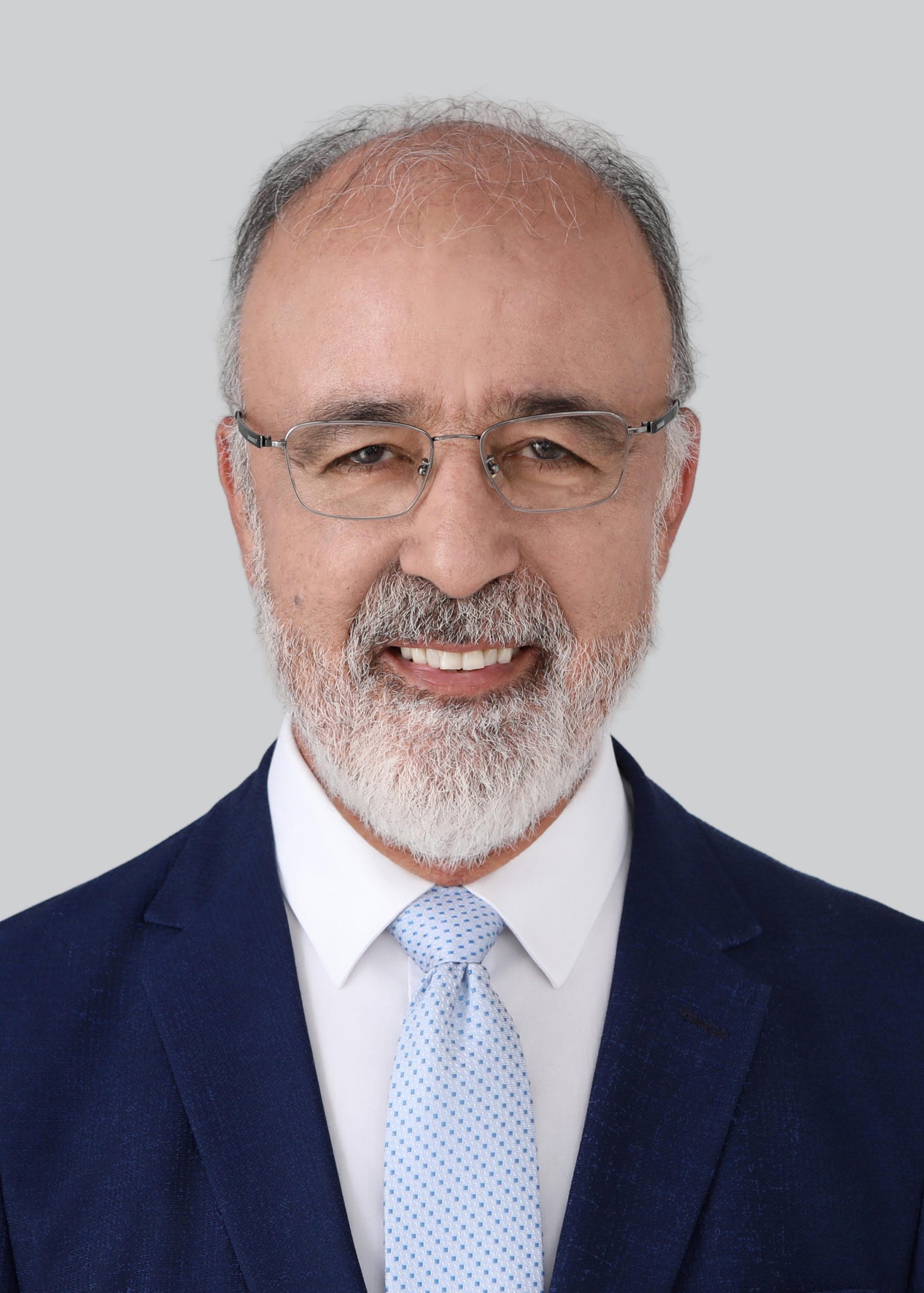
Mohamad Sawan is Chair Professor in Westlake University, Hangzhou, China, and Emeritus Professor in Polytechnique Montreal, Canada. He is the founder and director of the Center of Excellence in Biomedical Research on Advances-on-Chips Neurotechnologies (CenBRAIN Neurotech) in Westlake University, and of the Polystim Neurotech Lab in Polytechnique Montreal. He received his Ph.D. degree from the University of Sherbrooke, Canada. He was awarded the Canada Research Chair in Smart Medical Devices (2001-2015) and was leading the Microsystems Strategic Alliance of Quebec (ReSMiQ), Canada (1999-2018). He is Co-Founder and was Editor-in-Chief of the IEEE Transactions on Biomedical Circuits and Systems (2016-2019). He is Founder and Co-Founder of several International conferences such as IEEE NewCAS, BioCAS, etc. He was General Chair or Co-Chair of numerous internal conferences. He was hosted the 2016 IEEE ISCAS in Montréal. Dr. Sawan published more than 1000 peer-reviewed journal and conference papers, 32 patents, and 46 other patents are pending. He received several awards, among them the Barbara-Turnbull Award from the Canadian Institutes of Health Research (CIHR), the Bombardier and Jacques-Rousseau Awards, the Queen Elizabeth II Golden Jubilee Medal, the Medal of Merit from the President of Lebanon, the Chinese National Friendship Award. Dr. Sawan is a Life Fellow of the IEEE (LFIEEE), a Fellow of the Royal Society of Sciences of Canada (FRSC), a Fellow of the Canadian Academy of Engineering (FCAE), a Fellow of the Engineering Institutes of Canada (FEIC), and an “Officer” of the National Order of Quebec.
Abstract
The rapid advancement of deep learning has driven an insatiable demand for efficient AI inference across autonomous driving, large language models, and multimodal reasoning. While GPGPU platforms offer broad programmability, they fall short in energy efficiency and cost for embedded systems such as intelligent vehicles, where power, area, and real-time constraints are non-negotiable. This talk explores how dataflow architectures offer a compelling path forward for this challenge. By routing tensor operations through explicitly managed, streaming data paths, dataflow computing achieves high hardware utilization with minimal synchronization overhead. Realizing its full potential, however, demands deep hardware–software co-design: the compiler must actively orchestrate computation and data movement across processing elements, with the operating system and runtime stack completing the loop.
Biography
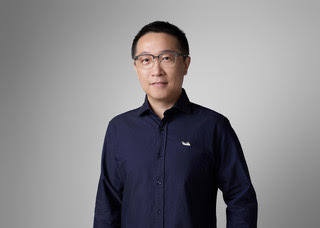
Yan Xie has served as Chief Technology Officer of Li Auto since December 2022. He joined the company in July 2022 as Senior Vice President. At Li Auto, Mr. Xie leads the development of the company’s full-stack, self-developed software and hardware systems, including edge AI inference chips, the open-source Xinghuan OS, and the centralized computing unit (CCU), driving the integration of intelligent automotive architecture. Mr. Xie brings extensive experience in the technology industry, having held leadership positions across major global companies. Prior to joining Li Auto, he spent three years at Huawei, where he served as Vice President of the Consumer Business Group Software Department and General Manager of the Terminal OS Department. Before Huawei, he worked for five years at Alibaba Group as the Chief Architect and rotating General Manager of AliOS. Earlier in his career, he spent six years at Intel. Mr. Xie received his Bachelor’s degree in Information and Electronic Engineering from Zhejiang University in 2001 and his Master’s degree in Computer Engineering from the University of Delaware in 2003.
Abstract
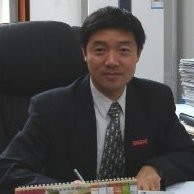
Graph computing has become a fundamental paradigm for modeling complex relational data, supporting applications from large-scale analytics to modern AI. However, it remains fragmented across diverse paradigms, such as traversal, mining, learning, and querying, leading to challenges in programmability, efficiency, and scalability under extreme sparsity. This talk presents a unified approach based on an abstraction-first, hardware–software co-design methodology.
Biography
Hai Jin is a Chair Professor of computer science and engineering at Huazhong University of Science and Technology (HUST) in China. Jin received his PhD in computer engineering from HUST in 1994. In 1996, he was awarded a German Academic Exchange Service fellowship to visit the Technical University of Chemnitz in Germany. Jin worked at The University of Hong Kong between 1998 and 2000, and as a visiting scholar at the University of Southern California between 1999 and 2000. He was awarded Excellent Youth Award from the National Science Foundation of China in 2001. Jin is a Fellow of ACM, a Fellow of IEEE, and a Fellow of CCF. He has co-authored more than 20 books and published over 1000 research papers. His research interests include computer architecture, parallel and distributed computing, big data processing, data storage, and system security.